The timer, explained
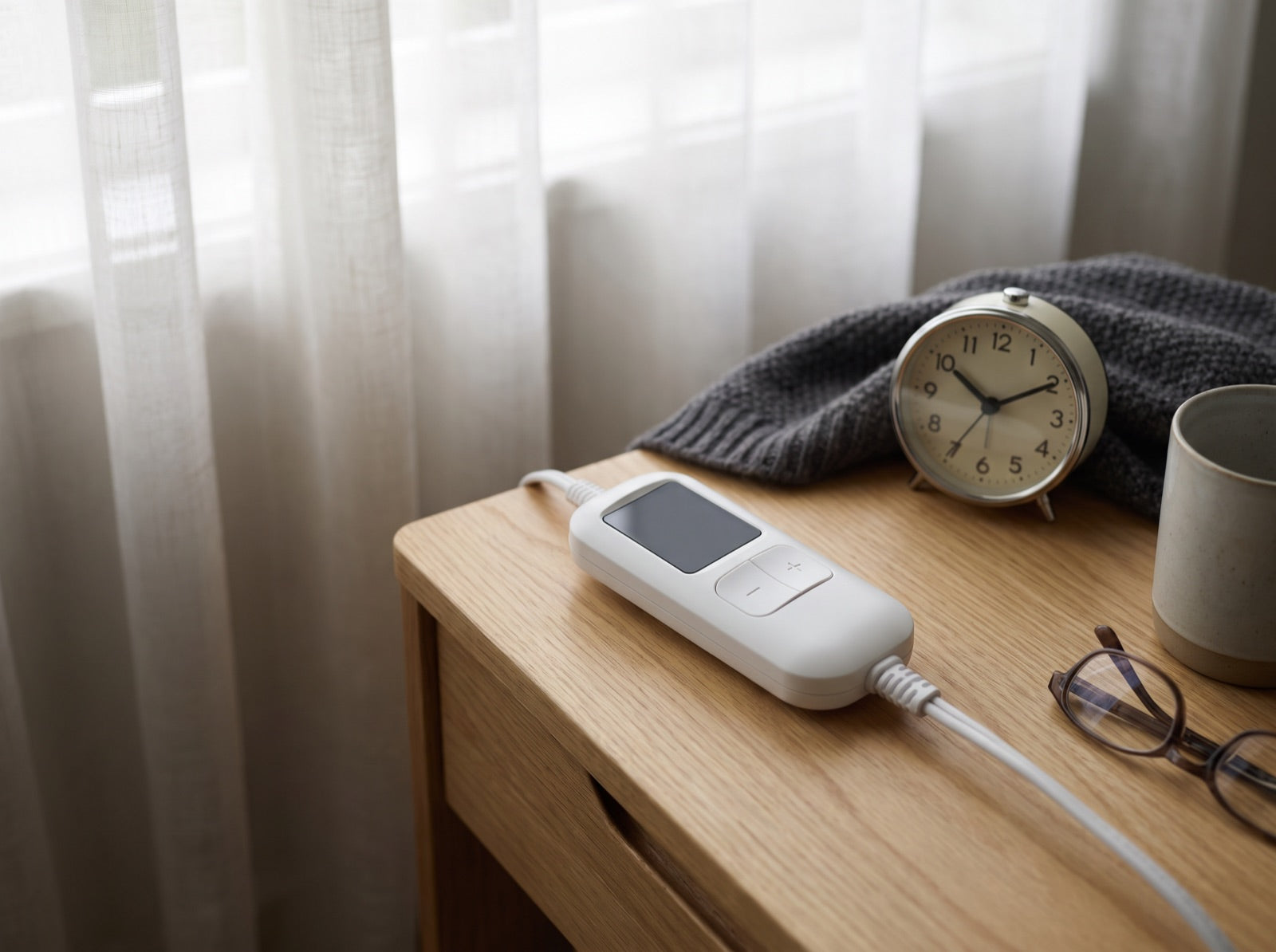
Every product in the range switches itself off. The only question is when, and you choose that when you switch it on.
What the timer does
You set a duration when you settle in. When the time runs out, the power stops. Not a standby, not a lower setting: off. If you fall asleep on the sofa, and people do, the decision has already been made.
The timers, product by product
| Product | Timer |
|---|---|
| Essential Heated Throw | automatic shut-off after 3 hours |
| Signature Heated Throw | ten steps, 1 to 10 hours |
| Summit Heated Throw | nine steps, 1 to 9 hours |
| Essential underblankets | automatic shut-off after 3 hours |
| Signature underblankets | three steps: 2, 4 or 6 hours |
| Summit underblankets | three steps: 1, 3 or 9 hours |
| Heated cushions | automatic shut-off after 90 minutes |
Why not all night
A heated throw is made for the evening, not for the whole night. Ten hours is the longest timer in the range, and it exists for the long winter Sunday, not for sleeping under. A throw is at its best on top of you while you are awake to enjoy it.
The bed is the underblanket's job, and even there the logic is the same: it warms the mattress, the mattress holds the warmth, and the bed stays comfortable long after the power stops. Warming the bed is not the same as heating all night.
The second mechanism
Alongside the timer, the heating element carries overheat protection: if the textile gets hotter than it should, the power cuts. You never set it and never see it. It is simply there, the way a thermostat is there.
Set the timer for the evening you actually want. When it runs out, the power stops, and nothing asks you to remember anything. That is the feature.
Next: How to wash a heated throw, the other question everyone asks before buying.