What it costs to run
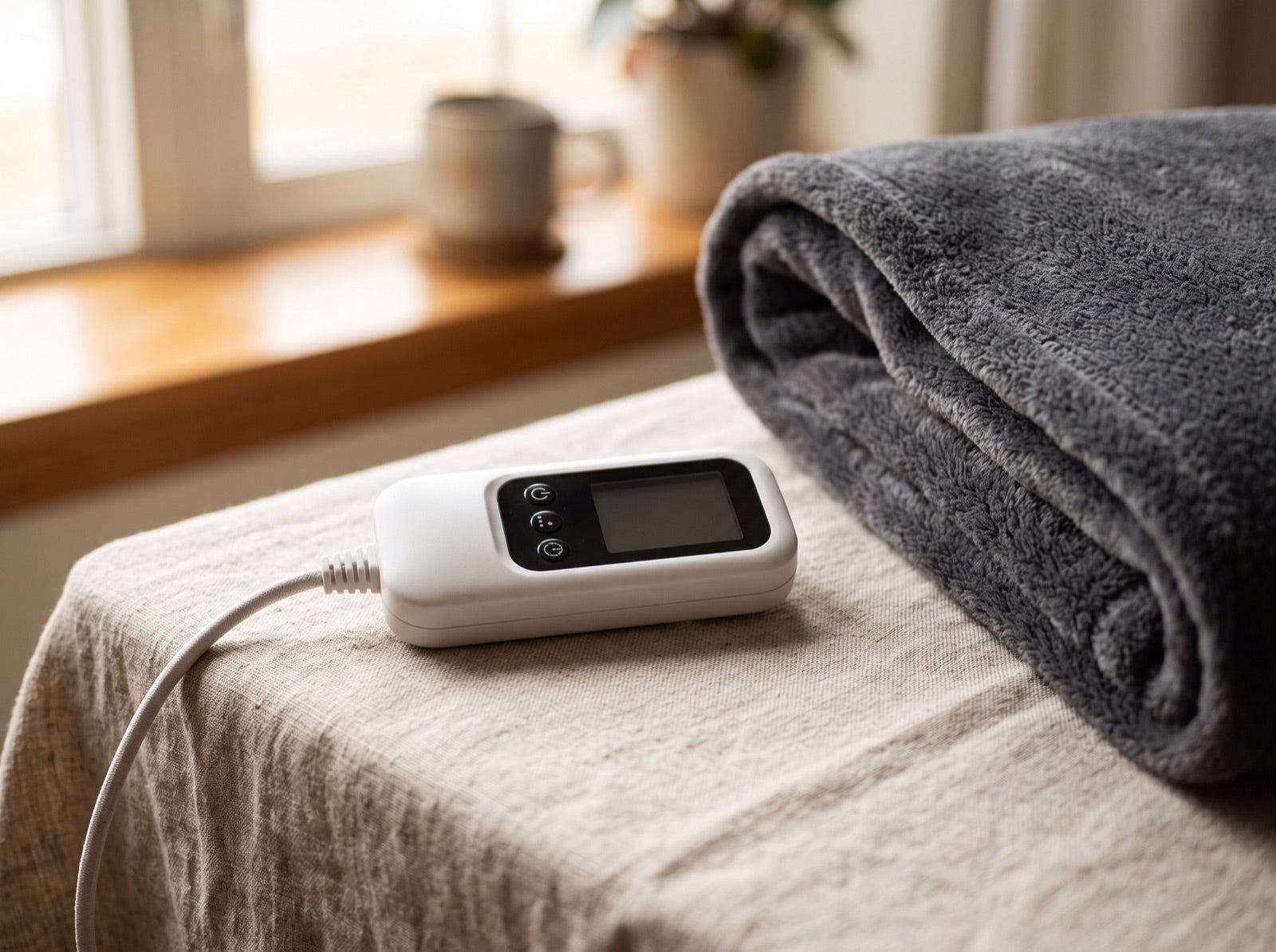
A heated throw draws 160 W. A plug-in radiator draws 2,000 W. Both keep one person warm. This page is the arithmetic.
The sums: four hours, side by side
Take one long evening: four hours on the sofa, both appliances at full power. Electricity is priced per kilowatt-hour, so the cost is the power multiplied by the time, multiplied by your unit rate.
| The heated throw | 160 W × 4 h | 0.64 kWh |
|---|---|---|
| 0.64 kWh × 26.1p | 17p | |
| The plug-in radiator | 2,000 W × 4 h | 8.00 kWh |
| 8.00 kWh × 26.1p | £2.09 |
The rate is the Ofgem energy price cap, electricity unit rate, direct debit, national average, 1 July to 30 September 2026. The cap changes every three months. The kilowatt-hours do not.
A week, a winter: what an evening habit adds up to
Say the throw is on five evenings a week, four hours each time. That is 3.2 kWh a week, about 84p. A UK heating season runs roughly from October to February: twenty-two weeks. At the same rhythm, the radiator spends the season at 40 kWh a week.
| At this rhythm | The throw | The radiator |
|---|---|---|
| One week (five evenings of four hours) | £0.84 | £10.45 |
| One winter (twenty-two weeks, October to February) | about £18 | about £230 |
The throw: 5 × 0.64 kWh × 26.1p comes to 83.5p a week, and £18.37 over twenty-two weeks. The radiator: 5 × £2.09 is £10.45 a week, and 22 × £10.45 is £229.90 for the winter.
What this does not say
These sums assume both appliances draw their rated power for the whole four hours. Real appliances cycle: once you are warm, you turn the throw down from the top setting, and a radiator's thermostat clicks on and off. Real use usually costs less than the arithmetic above.
The two appliances are also not doing the same job. A throw heats one person. A radiator heats a room, and everyone in it. If three people are watching the film, the room may be the right thing to heat.
And 26.1p is the price cap average, not your tariff. Your unit rate may be higher or lower, and the cap changes every three months.
This compares two appliances running for the same length of time. It is not a comparison of your heating bill.
Your own numbers
Put your tariff, your evenings and your hours into the calculator: What it costs to run. The kilowatt-hours above come from the rated power of the Signature Heated Throw, 160 W at its highest setting. The radiator figure is the common 2,000 W setting of a portable heater. The reading of both is in 160 watts against 2,000.